
Emery County Public Records Search
Emery County public records are kept by offices in the county courthouse in Castle Dale and by several state agencies in Salt Lake City. This page explains the main sources for Emery County public records, how to contact each office, and how to make a formal request under Utah's open records law. Whether you need property deeds, court case information, or mineral records, the resources here will point you in the right direction for Emery County.
Emery County Quick Facts
Emery County Recorder
The Emery County Recorder maintains all official property records for the county. The office is at 75 East Main Street, Castle Dale, UT 84513, and can be reached at (435) 381-3540. Hours are Monday through Friday, 8:00 AM to 5:00 PM. The official website is at emerycounty.com/recorder. The Recorder records and stores deeds, mortgages, liens, plats, easements, and other real property instruments for Emery County.
Emery County is in central Utah and has a long history of mining and energy production. Because of this, the Recorder's office maintains an unusually large volume of mineral rights documents, oil and gas leases, coal mine records, and related instruments in addition to standard residential and commercial property records. Researchers tracing mineral ownership in Emery County will find the Recorder's index an important starting point, though older mineral records may also be held at the Utah State Archives.
Recording fees are $40 for the first page and $2 for each additional description. Certified copies cost $5 plus $1 per page. For large or complex document requests, calling the office ahead of time helps staff prepare and can reduce wait times at the counter.
Utah's GRAMA statutes, shown at the Utah Legislature's website, govern how public records can be accessed across the state. The image below comes from the official state legislature site where GRAMA rules are published.
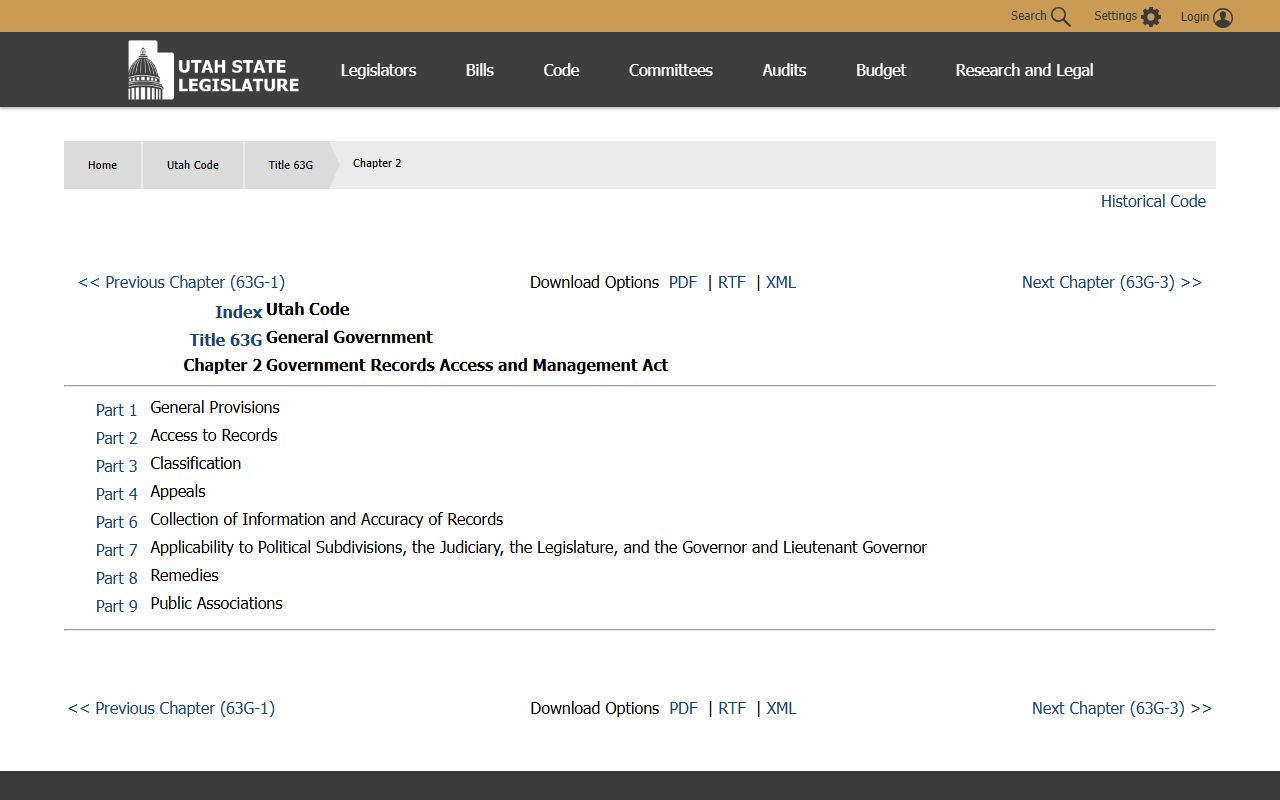
The Utah Legislature site at le.utah.gov publishes the full text of Utah Code § 63G-2, which is the law that covers public records access in Emery County and across the state.
Emery County Clerk and Auditor
The Emery County Clerk-Auditor office is also at 75 East Main Street, Castle Dale, UT 84513. The phone number is (435) 381-5195. Office hours are Monday through Friday, 8:00 AM to 5:00 PM. The website is at emerycounty.com/clerk-auditor. The Clerk-Auditor is the official keeper of county records, runs elections, issues marriage licenses, and serves as clerk to the Emery County Commission.
GRAMA requests for Emery County government records should be directed to the Clerk-Auditor office or to the specific department that holds the record you need. Under Utah Code § 63G-2-201, you have the right to inspect or copy public records. You do not need to give a reason, and you do not need to be a Utah resident. The agency must respond within 10 business days. Black and white copies cost $0.25 per page, and color copies cost $0.50 per page. The first 15 minutes of staff time spent finding records is free.
The Clerk-Auditor office also maintains commission minutes, ordinances, resolutions, and other county government records. These can be useful for researching local government decisions, zoning history, and county contracts.
Emery County Sheriff and Criminal Records
The Emery County Sheriff's Office handles law enforcement in unincorporated parts of the county and operates the county detention facility. Incident reports and arrest records from the Sheriff's Office can be obtained through a formal records request. Fees vary depending on the type and length of the report. Contact the Sheriff's Office directly for current fee information and turnaround times.
For criminal history checks beyond local records, the Utah Bureau of Criminal Identification handles name-based and fingerprint-based background checks statewide. The BCI is at 3888 West 5400 South, Taylorsville. Phone: (801) 965-4445. A name check costs $15, and a fingerprint check costs $33.25. The BCI website at bci.utah.gov explains the process and what information each type of check returns. Anyone may request a background check through the BCI, not just law enforcement agencies.
Emery County Court Records
The Seventh District Court serves Emery County and handles civil, criminal, family law, probate, and juvenile matters. Court records in Emery County are public under GRAMA except for sealed matters, juvenile records, and certain financial disclosures. The courthouse in Castle Dale has public access terminals where you can search case indexes at no cost. Staff at the District Court Clerk office can help you locate case files and provide certified copies.
The Utah Courts' online search tool, XChange, allows remote access to court records across all district courts, including the Seventh District. Searches cost $0.35 each, or you can subscribe for $40 per month for unlimited use. Start at utcourts.gov to create an account. For older cases that may not be in the online system, visiting the courthouse or submitting a written request to the clerk is the best approach.
Property and Assessor Records in Emery County
The Emery County Assessor determines taxable values for real property, personal property, and business equipment in the county. Assessed value data is public and free to review. These records show ownership, legal description, assessed value, and tax history for each parcel. Because Emery County has significant industrial land tied to coal mines and power generation facilities, assessor records here cover a broader range of property types than you would find in a suburban county.
For the fullest picture of any parcel in Emery County, use both the Assessor's records and the Recorder's document index together. The Assessor holds valuation data, while the Recorder has the actual deed, mortgage, and lien instruments. Together they confirm current ownership and encumbrances. Both offices are in the same courthouse building in Castle Dale, so an in-person visit to one often allows you to check the other on the same trip.
Requesting Emery County Public Records Under GRAMA
Utah's Government Records Access and Management Act gives any person the right to inspect or copy public records. The law is at Utah Code § 63G-2-201. You can request records from any Emery County office. Write a clear description of what you need so the agency can find it. Submit your request to the office that holds the record, or start with the Clerk-Auditor if you are not sure where to go.
The agency has 10 business days to respond. They may approve, deny, or ask for more time. Copy fees are $0.25 per page black and white and $0.50 per page color. Staff time beyond the first 15 minutes may be billed. If your request is denied, you may appeal to the agency's chief administrative officer and then to district court under Utah Code § 63G-2-802.
Older Emery County records, including some historical property documents and commission records, may be held at the Utah State Archives. The Archives is at 346 South Rio Grande Street, Salt Lake City, UT 84101. Phone: (801) 531-3847. The website at archives.utah.gov has an online catalog you can search to find what historical records exist for Emery County before making the trip or submitting a remote request.
The Utah State Archives holds historical records from counties across the state. The screenshot below is from the official Archives website.
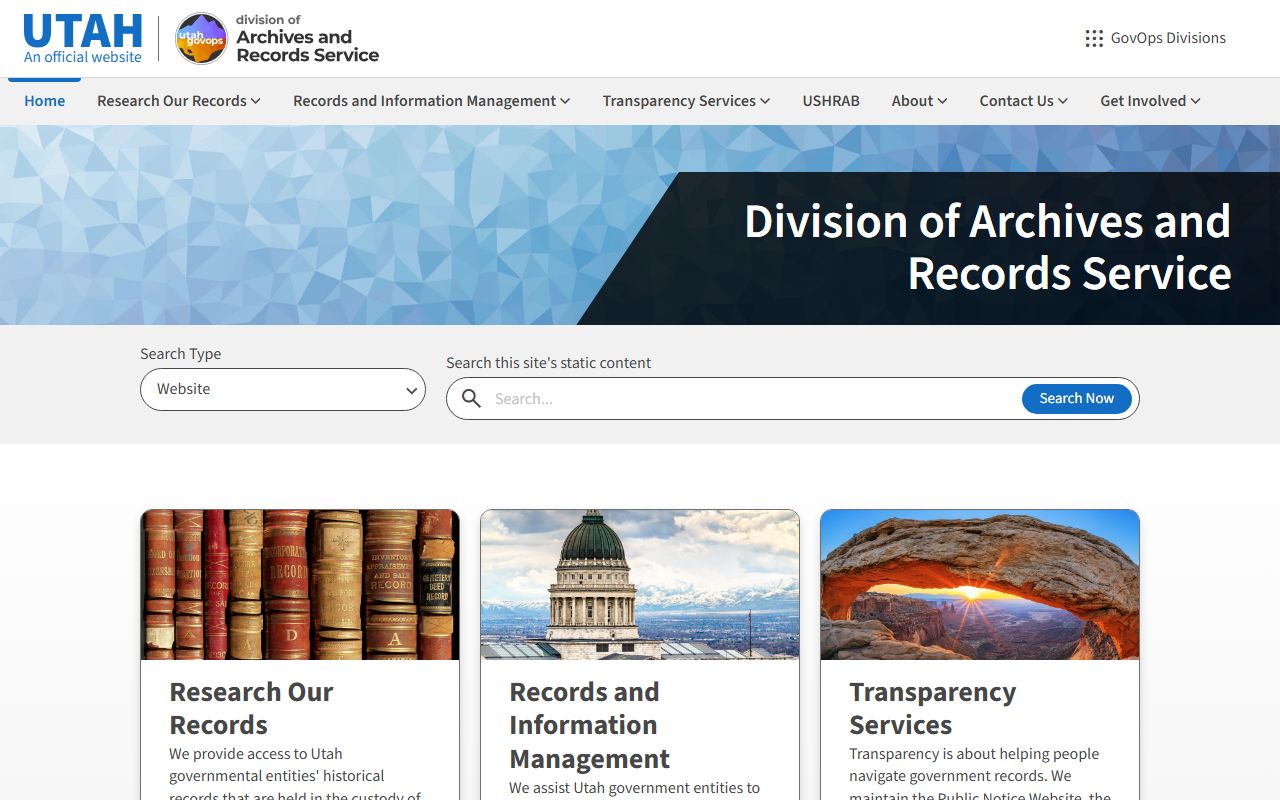
The Utah State Archives provides access to older Emery County government records that have been transferred to the state repository for preservation.
Note: If your GRAMA request involves Emery County's energy or mining-related regulatory records, some of those may be held at the Utah Division of Oil, Gas and Mining rather than at the county level.
Cities in Emery County
Emery County does not have any cities that meet the population threshold for a dedicated public records page. The county seat is Castle Dale. All public records for Emery County residents and properties are processed through the county offices described above.
Nearby Counties
Emery County is in central Utah. The links below go to public records pages for neighboring counties in the region.