
Search Utah Public Records
Utah public records are available to anyone under the Government Records Access and Management Act, also known as GRAMA. State and local agencies across all 29 counties hold a wide range of documents. Court case files, property deeds, criminal histories, vital records, and professional licenses all fall under this law. You can search many records online, send a written request by mail, or visit an agency in person. This guide covers the main sources for public records in Utah and how to get them.
Utah Public Records Quick Facts
Utah Public Records Law and GRAMA
Utah enacted the Government Records Access and Management Act in 1991. It took effect July 1, 1992, replacing two older statutes that had governed public access to government files. GRAMA now covers every state agency, every county office, every city department, and every school district in Utah. Under Utah Code § 63G-2-201, anyone has the right to inspect a public record free of charge and to take a copy during normal working hours. The law sets a default rule that all records are public unless a specific statute says otherwise. This presumption of openness is the core principle behind public records access in Utah. Every person, not just residents, can use GRAMA to request documents from any government body in the state.
GRAMA classifies some records as private, controlled, or protected. These three categories limit access when privacy or safety concerns outweigh the interest in transparency. Private records typically contain personal information where release would constitute an unwarranted invasion of privacy. Controlled records include sensitive data such as Social Security numbers. Protected records cover information kept confidential for specific statutory reasons, including certain law enforcement files and trade secrets. Knowing these categories helps you understand why some requested records may be released in full, partially redacted, or denied in Utah.
The Utah Legislature also recognized two constitutional rights when it wrote GRAMA. One is the public's right to access information about how government operates. The other is the individual's right to privacy regarding personal data collected by government. Under § 63G-2-102, the law tries to balance both rights. When a conflict arises, the agency weighs the need for transparency against the privacy interest at stake. This balancing act guides how agencies respond to every public records request in Utah.
The Utah State Legislature's GRAMA page has the full text of the statute, including all definitions, record classifications, and appeal procedures for public records in Utah.
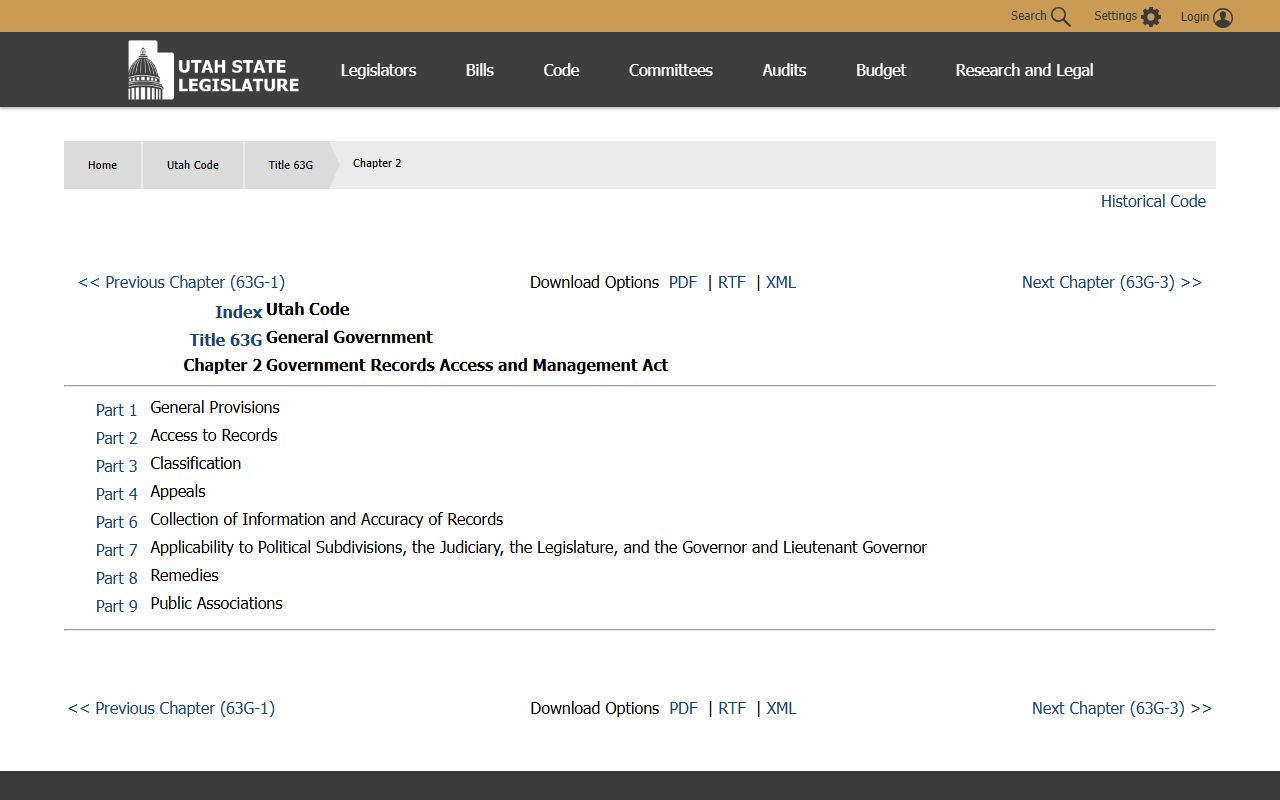
You can read the exact statute language, search specific code sections, and find the legal definitions that govern all public records requests made under GRAMA in Utah.
The Utah State Legislature website also gives free public access to all current statutes, session laws, bill histories, and committee recordings without any GRAMA request needed.
You can search the full Utah Code by title, chapter, or keyword and download PDF versions of any statutory section at no cost directly from the Legislature's site.
How to Request Public Records in Utah
Any person can submit a GRAMA request to any governmental entity in Utah. The request must be in writing. No special form is required, though many agencies have their own forms to make the process easier. Under § 63G-2-204, the agency must respond within ten business days of receiving your request. Media organizations get a faster five-day response time. The agency can approve the request and provide records, deny it with legal citations, tell you the record does not exist, or notify you that more time is needed due to unusual circumstances. All responses must be in writing in Utah.
Fees for copies of records are set by each agency. Under § 63G-2-203, agencies may charge only the actual cost of providing the record. Standard copy fees are $0.25 per page for black and white. Color copies are $0.50 per page. Staff time is free for the first fifteen minutes of any request. After that, the agency may bill at the rate of its lowest-paid employee who can do the work. Electronic records are often cheaper since no printing is needed. If you believe the release would benefit the public rather than just yourself, you can ask for a fee waiver when you submit your request in Utah.
The Utah Open Data Portal offers free public access to hundreds of government datasets without requiring a formal GRAMA request at all.
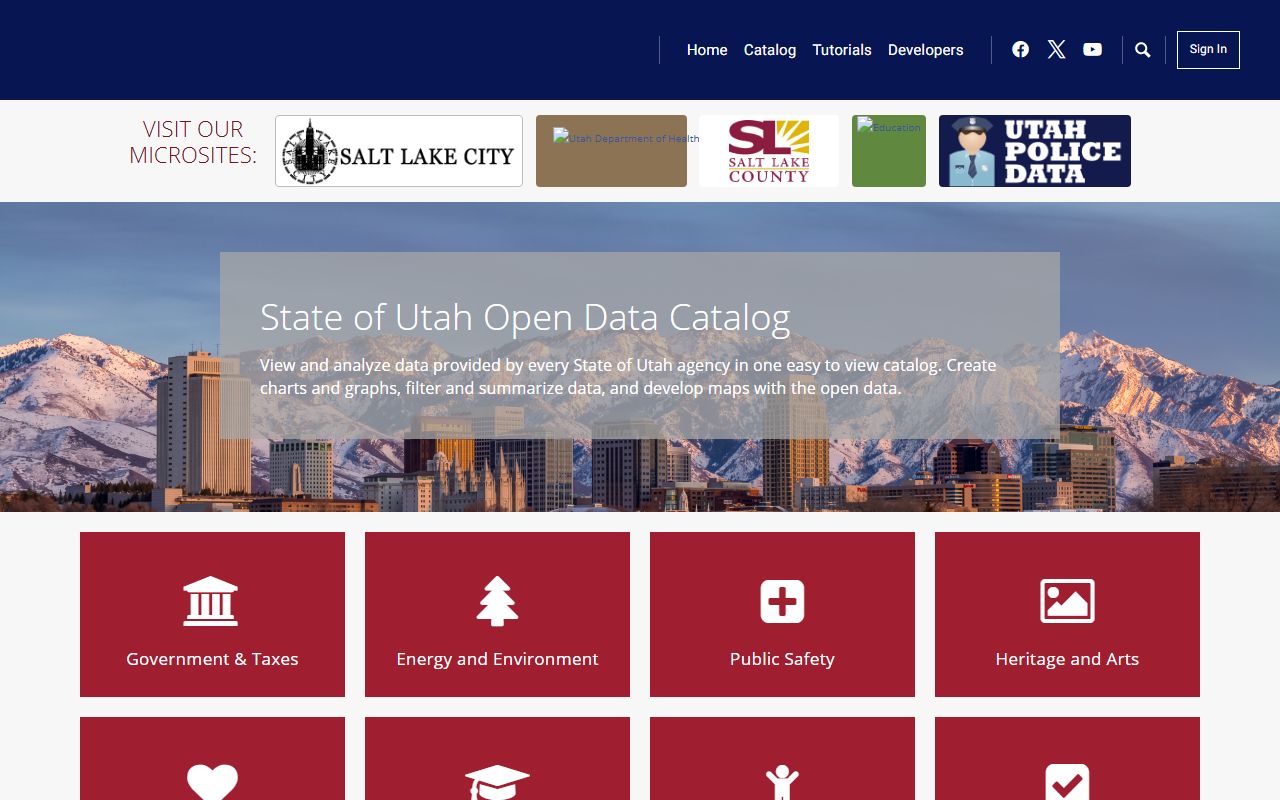
The portal hosts financial data, demographic statistics, health data, transportation records, and more from state agencies in machine-readable formats that can be downloaded and analyzed at no cost.
If an agency denies your request, you can appeal. First appeal to the agency's chief administrative officer under § 63G-2-401. The officer has twelve business days to respond. If the denial stands, you can file a lawsuit in district court under § 63G-2-802. The court may enjoin the agency and award attorney fees if you substantially prevail. You must file within 35 days of the appeal decision in Utah.
Utah Court Records and Case Search
The Utah Courts XChange system is the main online tool for searching court records. XChange covers District and Justice Courts throughout Utah and provides access to case information entered by court personnel at courthouses across all 29 counties. You can search by party name, case number, citation number, or attorney name and bar number. The system shows case summaries, docket entries, hearing schedules, judgments, and document images for many cases. XChange is a subscription service. It costs $0.35 per search or $40.00 per month for up to 500 searches. A one-time setup fee of $25.00 applies to monthly subscribers, and a $10.00 fee applies to guest accounts. Document downloads cost $1.00 each. Those who cannot pay for a subscription can use free XChange access at most District Court clerk offices on public access terminals. The Utah State Law Library in Salt Lake City also provides free walk-in access to XChange.
Utah's trial courts are called District Courts. They handle felony criminal cases, family law matters, civil disputes above $11,500, probate, estate matters, and juvenile proceedings. There are eight judicial districts across the state. For older records not in XChange, the Utah State Archives maintains historical court files dating to the territorial period. To request certified copies of specific documents, contact the District Court clerk in the county where the case was filed. Visit utcourts.gov to start your search or find the clerk for a specific county court in Utah.
Justice Courts handle misdemeanor cases, traffic violations, and city ordinance matters. Many cities in Utah operate their own Justice Courts. Records from these courts are also accessible through XChange, though some older files may require a direct request to the specific court clerk in Utah.
Criminal Records and Background Checks
The Utah Bureau of Criminal Identification, known as BCI, is the state's central repository for criminal history information. BCI is a division of the Utah Department of Public Safety and operates under Utah Code Title 53, Chapter 10. The agency processes background check requests for individuals, employers, and licensing boards. A name-based check costs $15.00 per request. A fingerprint-based check costs $33.25 and gives more complete results. Fingerprint checks are required for many professional licenses and positions working with children or vulnerable adults. BCI is located at 3888 West 5400 South in Taylorsville. You can submit requests in person, by mail, or through authorized vendors. Mail requests take 5 to 10 business days to process.
The Utah Bureau of Criminal Identification website has application forms, fee schedules, and instructions for submitting background check requests in Utah.
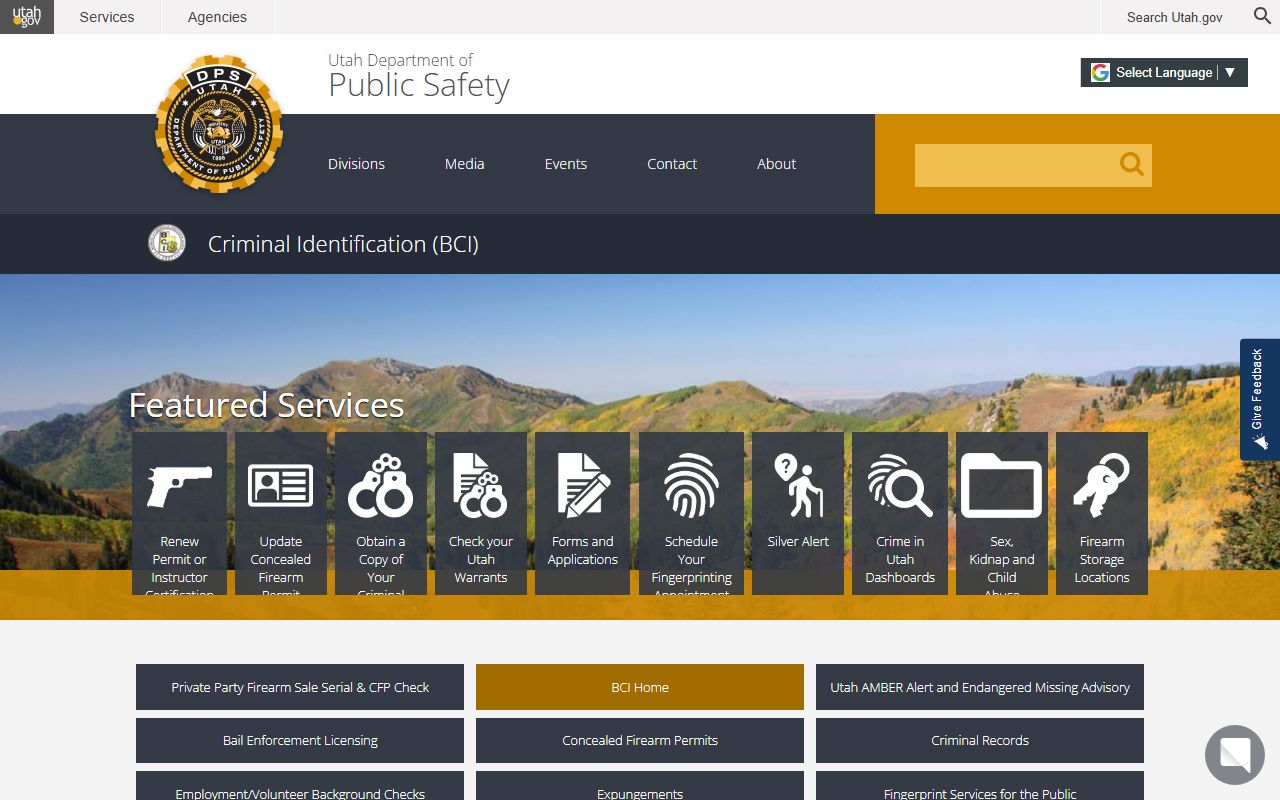
BCI also maintains the Utah Sex Offender and Kidnap Offender Registry, which is available to the public for free online. You can search by name, city, or offense type, and results include photographs and offense details.
The Utah Department of Corrections Offender Search provides a free public database of individuals currently under state supervision. Results include custody status, facility location, and offense information for people incarcerated or on probation in Utah.
The Corrections database covers state-level offenders only. For county jail inmates, contact the sheriff in the relevant county to ask about the local jail roster in Utah.
The Utah Department of Public Safety oversees BCI, the Highway Patrol, and the State Bureau of Investigation, all of which maintain records available under GRAMA.
The Highway Patrol maintains motor vehicle accident reports that can be requested for $5.00 to $10.00 depending on the format and delivery method in Utah.
Utah Vital Records
The Utah Office of Vital Records and Statistics maintains birth, death, marriage, and divorce certificates for events occurring in Utah. The office is part of the Utah Department of Health and Human Services and can be reached at (801) 538-6105. Birth and death records go back to 1905. Marriage and divorce certificates cover 1978 to 2010. For marriages or divorces outside that date range, contact the county clerk or district court in the county where the event occurred. The office is located at 288 North 1460 West in Salt Lake City and is open Monday through Friday during regular business hours.
The SILVER online ordering system lets you request certified copies of Utah birth and death certificates from home without visiting an office in person.
Birth certificates cost $18.00 for the first copy and $8.00 for each additional copy ordered at the same time. Death and marriage certificates are $16.00 for the first copy and $8.00 for additional copies.
Vital records in Utah have eligibility requirements. Not everyone can get a copy of every record. For birth certificates, eligible requesters include the person named, their parents, legal guardians, and legal representatives. For death certificates, immediate family members and legal representatives qualify. You must show valid photo identification. A driver's license or passport works. Many local health departments across Utah's 29 counties also issue vital records for events occurring anywhere in the state, often with same-day walk-in service. Contact your county's health department to find out if they offer this service near you.
Property Records Across Utah
Property records in Utah are held by the County Recorder in each of the 29 counties. These offices record deeds, mortgages, liens, plats, easements, and other documents affecting real property. Recording fees are set by state law: $40.00 for the first page of a document with up to 10 property descriptions, plus $2.00 for each additional description. Certified copies cost $5.00 per document plus $1.00 per page. Many county recorders provide online search portals where you can look up records by owner name, parcel number, or address. E-recording is available in larger counties through authorized vendors. To find the recorder for a specific county, go to that county's page from the list below.
The Utah State Tax Commission oversees property tax policy statewide, with the Property Tax Division at propertytax.utah.gov handling assessment oversight and appeals information.
County assessors determine individual property values, and the Tax Commission provides statewide oversight. Property owners who disagree with their assessment may file an appeal with the county Board of Equalization each year.
The Utah Division of Real Estate maintains a searchable license database for agents, brokers, and appraisers, including current license status and disciplinary history, available at no charge online.
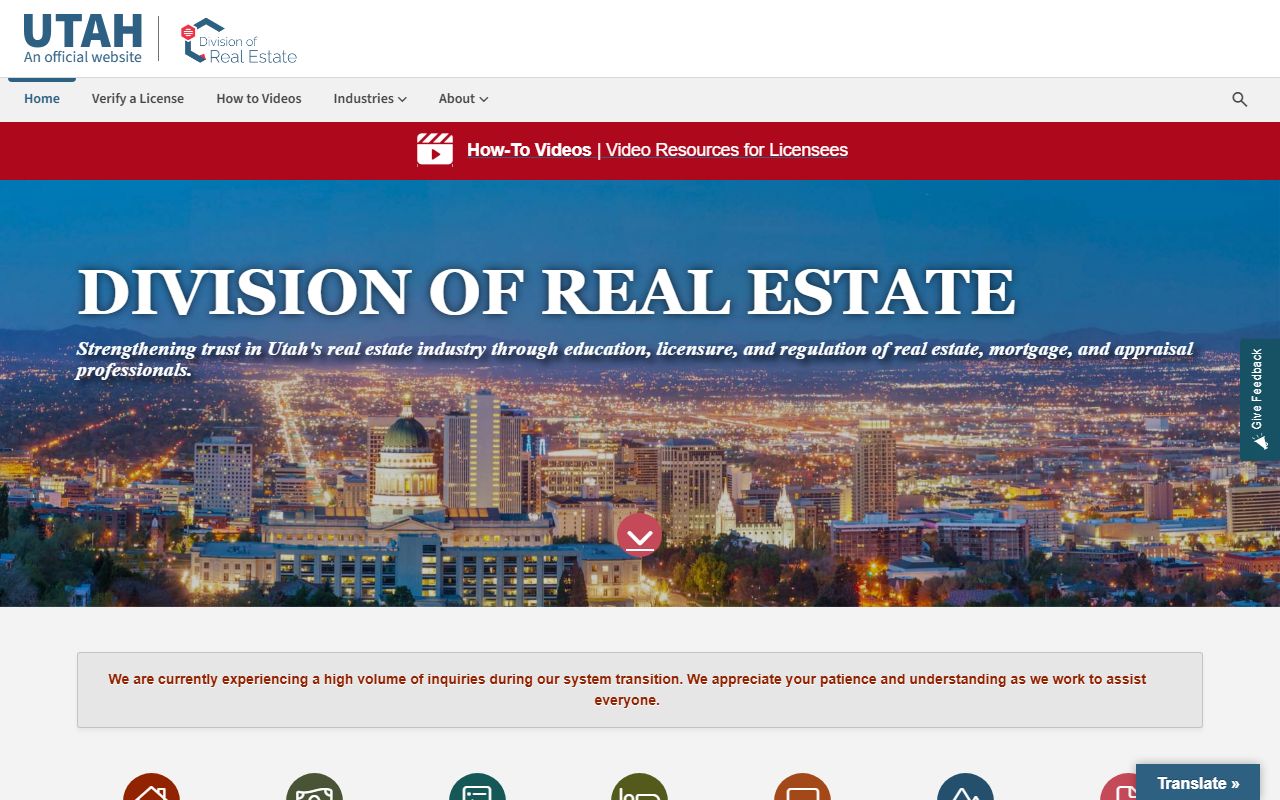
The Division posts final disciplinary orders online as public records. These cover suspensions, revocations, and consent agreements for real estate licensees in Utah.
Utah State Archives and Historical Records
The Utah State Archives and Records Service preserves government records of historical value and makes them available for research. The Archives maintains records from Utah's territorial period through the mid-20th century, including court files, land records, military records, and vital records indexes. Collections include Third District Court probate files from 1852 to 1948, naturalization records, homestead claims, and mining records. The Utah State Archives website at archives.utah.gov has an online catalog you can search before scheduling a visit. The Archives is located at 346 South Rio Grande Street in Salt Lake City and can be reached at (801) 531-3847 or by email at historyresearch@utah.gov.
The Utah State Archives maintains millions of historical government records and an online catalog you can search to identify collections before making a research appointment.
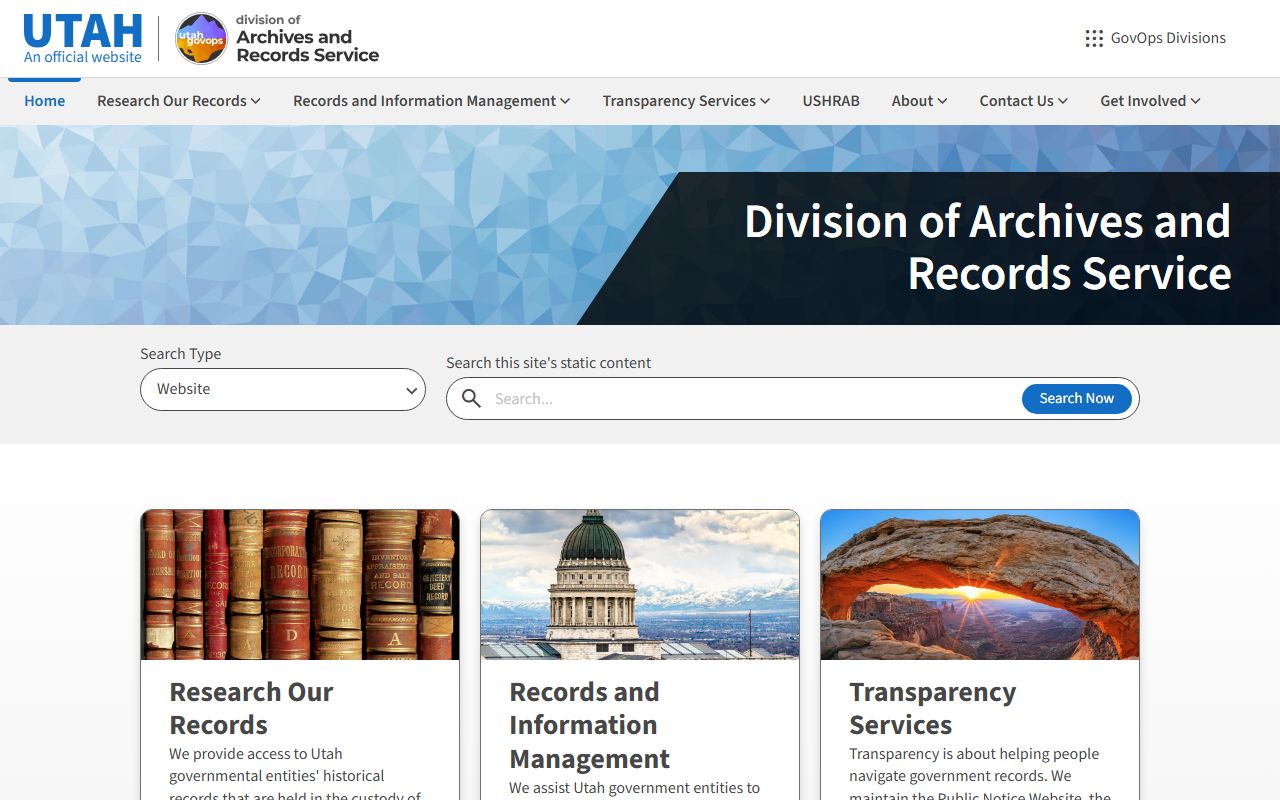
Note: The Research Center at the Rio Grande Depot building has been closed since 2020 due to earthquake damage. Contact the Archives by phone or email to confirm current access options before making the trip to Salt Lake City.
Professional License Records in Utah
The Utah Division of Occupational and Professional Licensing, known as DOPL, regulates over 60 occupations in the state. DOPL maintains an online license verification database searchable by name, license number, or profession. Results include current license status, expiration dates, and formal disciplinary actions. Healthcare professionals, engineers, accountants, contractors, and many others are regulated by DOPL. Final disciplinary orders are posted as public records. Visit dopl.utah.gov or call (801) 530-6628 for more on how to search and verify licenses in Utah.
The DOPL license verification portal lets you check the status of any professional license issued in Utah, including whether the licensee has faced any formal disciplinary action.
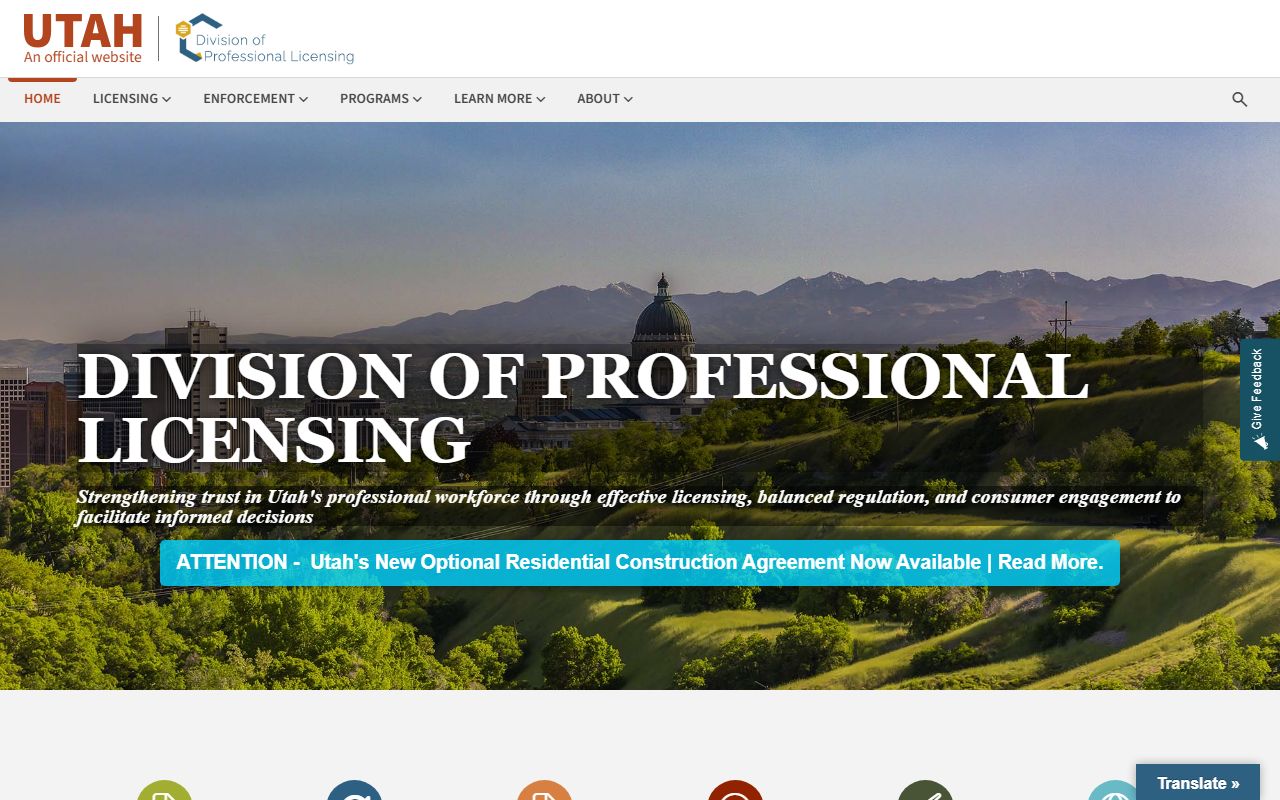
DOPL regulates more than 60 professions in Utah and posts all final disciplinary orders online as part of its public transparency commitment under GRAMA.
The Utah Department of Workforce Services publishes labor market data and agency program information freely through its website, and handles GRAMA requests for its own records through its GRAMA coordinator.

Much of the department's statistical and program data is available without a formal GRAMA request, but individual case records require a written request with proper identification and authorization in Utah.
Browse Utah Public Records by County
Each of Utah's 29 counties maintains its own public records through the County Clerk, Recorder, Sheriff, and District Court offices. Pick a county below to find local contact information, office addresses, and resources for public records in that area.
Public Records in Major Utah Cities
Residents of major cities can access public records through city offices, county courts, and state agencies. Pick a city below to find local resources for public records in that area.